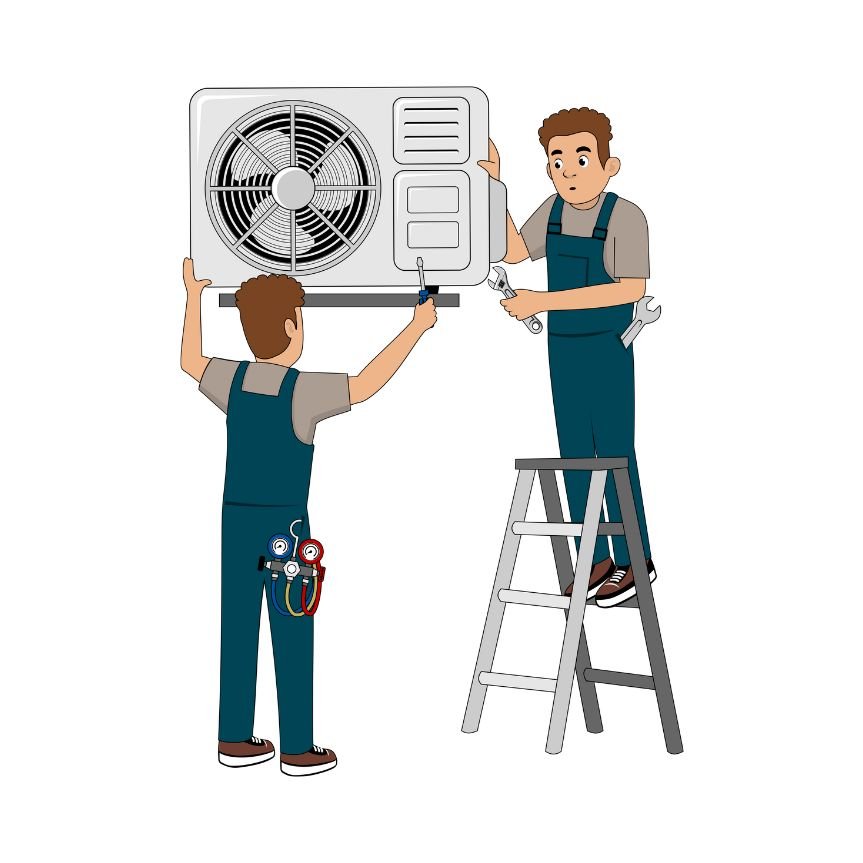
AC smells even when filter is clean because the filter is only one part of the air-conditioning system. A clean or recently replaced filter can trap airborne dust, but it does not automatically clean the evaporator coil, drain pan, condensate line, blower area, or ductwork.
From an HVAC technician’s perspective, persistent odor is usually a clue that something deeper inside the system needs inspection. A musty smell, sour odor, or damp-air smell can often be associated with moisture and contamination around the indoor unit. A burning or electrical smell, however, requires a different level of attention.
The key is to identify where the odor is coming from and when it appears, rather than simply replacing the filter again.
AC Smells Even When Filter Is Clean: What Causes It?
Several parts of an AC can collect moisture, dust, and organic debris over time.
Mold or microbial growth around the evaporator coil
The evaporator coil becomes cold during cooling and naturally collects condensation. If moisture remains on the coil or nearby surfaces, dust and debris can provide a suitable environment for microbial growth.
A persistent earthy or musty odor can be a sign that moisture-related contamination needs to be investigated. EPA guidance recommends controlling indoor moisture because excessive humidity increases the likelihood of mold growth.
Dirty evaporator coils
A filter cannot capture everything. Fine dust can eventually accumulate on the evaporator coil and surrounding components. That buildup can hold moisture and produce an unpleasant odor when the AC starts operating.
Dirty coils can also reduce cooling performance. ENERGY STAR recommends regular inspection and cleaning of evaporator and condenser coils as part of proper AC maintenance.
Moisture inside the indoor unit
If the indoor AC unit does not dry properly between cooling cycles, damp surfaces can develop. This is particularly relevant in humid conditions.
ASHRAE identifies moisture control as a major factor in preventing mold and microbial growth in buildings.
Dirty drain pan or blocked condensate drain
Your AC removes moisture from indoor air and sends the resulting condensate toward a drain. A dirty drain pan, partially blocked condensate line, or poor drainage can leave standing water inside or around the unit.
That stagnant moisture can contribute to an AC indoor unit smell.
ENERGY STAR also notes that a plugged drain can contribute to water damage and affect indoor humidity levels.
Dust and debris deeper inside the system
The blower wheel, internal panels, and other components can collect dust even when the filter looks clean. When air moves across these surfaces, odors can be carried into the room.
Ductwork contamination
For ducted systems, the source may not be the indoor AC unit itself. Dust, moisture, pests, or contamination inside sections of ductwork can create an AC duct smell that becomes noticeable whenever the blower operates.
Poor ventilation and excessive humidity
Sometimes the AC is not the original source of the smell. High humidity and poor ventilation can allow odors and pollutants to accumulate indoors. EPA recommends keeping indoor humidity under 60%, ideally around 30–50% where practical.
What Different AC Smells Can Tell You
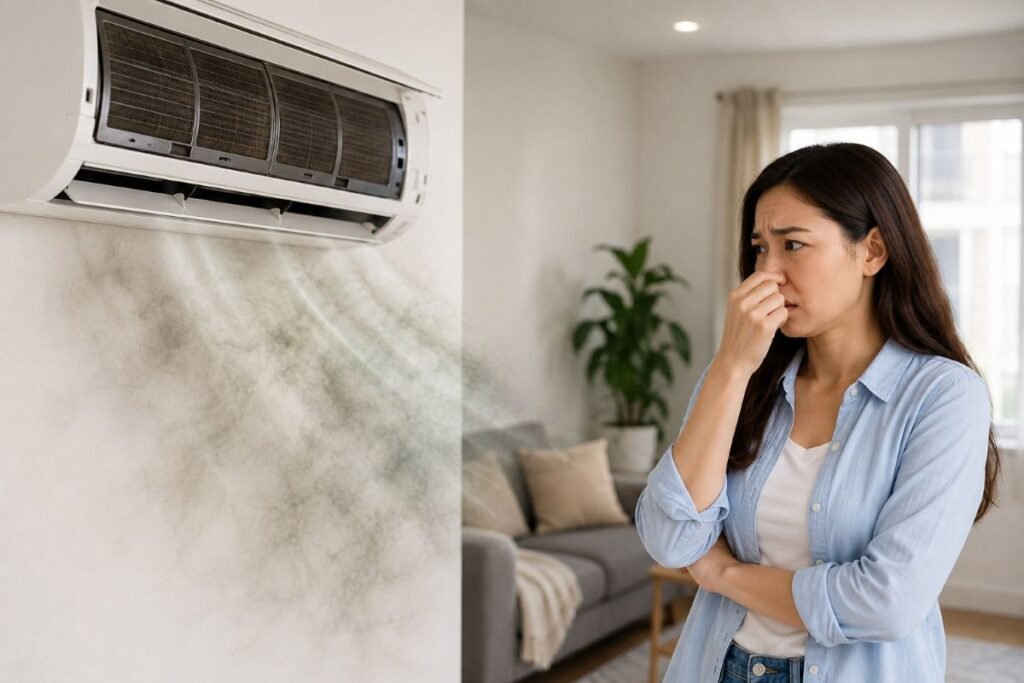
The type of smell can provide a useful starting point.
- Musty or damp smell: Often associated with moisture, dirty coils, drain pans, or microbial growth.
- Sour or unpleasant smell: May indicate accumulated organic debris, moisture, or contamination around the indoor unit.
- Rotten-egg-like smell: Could come from an external source, biological contamination, or another building issue. It should not automatically be blamed on the AC.
- Burning or electrical smell: Stop using the system if the odor is strong or persistent and arrange professional inspection. Electrical components, wiring, motors, or overheating parts can create safety concerns.
- Chemical smell: This can have several causes, including cleaning products, new materials, refrigerant-related issues, or other sources. A technician should investigate persistent or unusual odors rather than assuming the cause.
Can an AC Smell Bad Even With a New Filter?
Yes. AC smells even when filter is clean is a common situation because changing the filter does not remove contamination elsewhere in the system.
Think of the filter as the first line of defense, not the entire cleaning system. If the evaporator coil, blower compartment, drain pan, condensate line, or ductwork has an odor source, a new filter will not eliminate it.
This is why an AC can smell bad even after cleaning or replacing its filter.
What Can You Check Yourself?
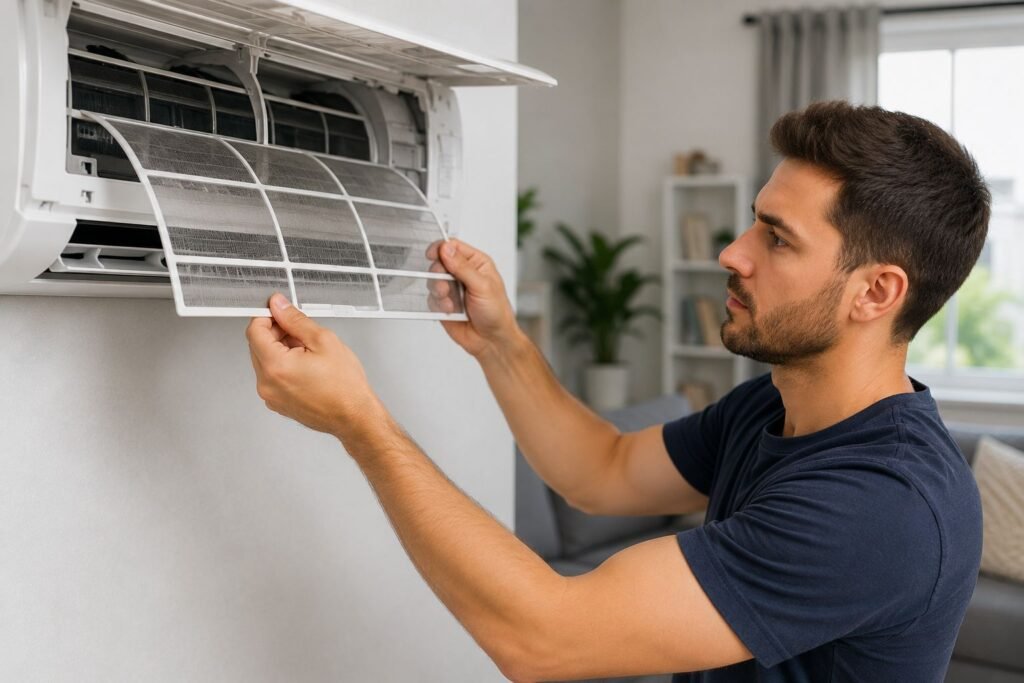
Before scheduling service, homeowners can perform a few safe visual checks:
- Confirm the filter is correctly installed and appropriate for the unit.
- Look for visible moisture around the indoor unit.
- Check for obvious water accumulation near the drain area.
- Notice whether the smell appears immediately when cooling starts or after the system has run for several minutes.
- Pay attention to whether the odor disappears temporarily after cleaning and then quickly returns.
- Check whether the smell comes from one room or several supply vents.
Avoid opening electrical compartments, handling refrigerant, bypassing safety controls, or attempting electrical repairs yourself.
If you notice water leakage, repeated drainage problems, or a strong burning odor, professional inspection is the safer approach.
When Should You Call an AC Professional?
Professional service makes sense when the odor persists despite a clean filter, returns shortly after cleaning, or is accompanied by water leakage, weak airflow, unusual noises, or poor cooling.
A technician can determine whether the source is the indoor unit, drainage system, blower assembly, coil, ductwork, or another component.
If the problem appears related to dirt or moisture, an appropriate AC cleaning service can be more useful than repeatedly replacing filters.
For cooling problems, unusual electrical odors, or component failures, an AC repair service should be considered instead.
How Professional AC Cleaning Can Help
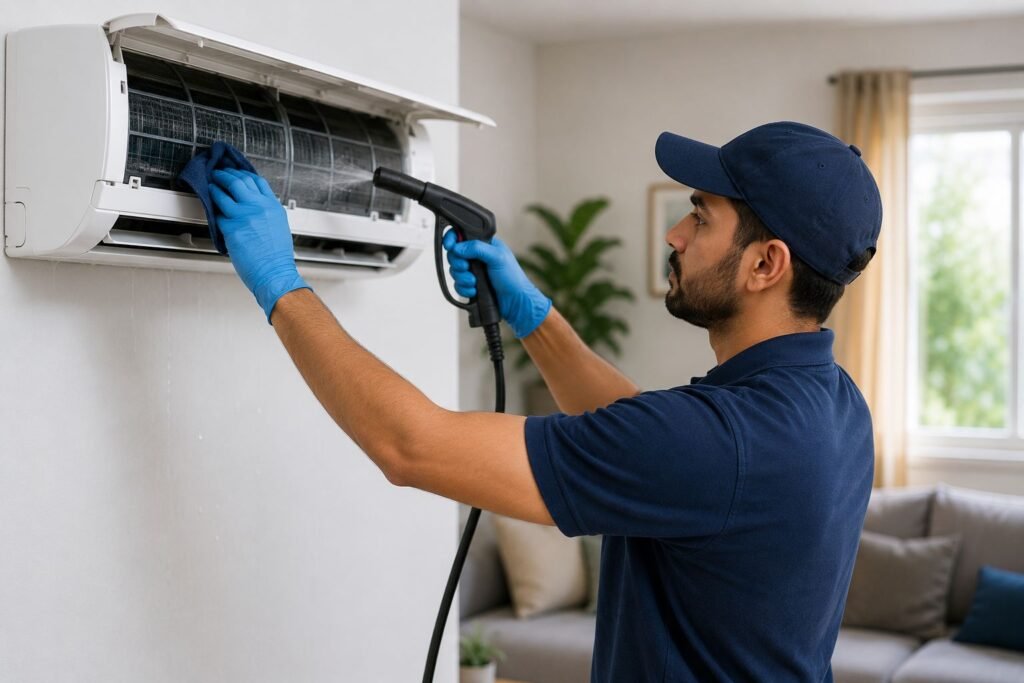
A proper inspection goes beyond wiping the visible front panel.
Depending on the system and condition, professional service may include:
- Evaporator coil inspection
- Indoor-unit and blower-area cleaning
- Drain pan inspection
- Condensate drain cleaning
- Airflow assessment
- Moisture and leakage checks
- Inspection for visible contamination
- Identification of persistent odor sources
- Recommendations for ongoing professional AC maintenance
The objective is not simply to make the AC smell better temporarily. The underlying moisture, drainage, contamination, or mechanical issue should be identified first.
For systems operating in humid environments, moisture management is especially important because persistent dampness can contribute to mold and odor problems.
FAQs
Why does my AC smell even though the filter is clean?
A clean filter does not mean the entire AC is clean. Dirty evaporator coils, moisture, drain pans, blower components, or ductwork can still produce odors.
Can a dirty AC coil cause bad smells?
Yes. Dust and debris on a damp evaporator coil can contribute to unpleasant odors and may also reduce cooling performance.
How do I get rid of a musty AC smell?
Start by checking the filter, visible moisture, and drainage. If the smell persists, have the indoor unit, evaporator coil, drain pan, condensate line, and relevant ductwork professionally inspected.
Can mold inside an AC cause an odor?
Yes. Mold and other microbial growth can produce musty or earthy odors. Moisture control is an important part of preventing and addressing these problems.
When should I call an AC professional for a bad smell?
Call a professional if the smell persists, repeatedly returns after cleaning, is accompanied by water leakage or poor cooling, or smells like burning or overheated electrical components.